
It’s a question that comes up often for people prescribed Suboxone, or for those considering stopping treatment: how long does it actually stay in your body? The answer isn’t straightforward — it depends on factors including your dosage, how long you’ve been taking it, and how your body processes medication. Understanding how Suboxone behaves in your system can help you make more informed decisions about your treatment and recovery.
What is Suboxone?
Suboxone is a prescription medication used in medication-assisted treatment (MAT) for opioid[1] use disorder. It works by reducing cravings and preventing withdrawal symptoms, helping patients maintain stability during recovery. It contains two active ingredients that work together:
- Buprenorphine — a partial opioid agonist that activates opioid receptors in the brain, but less intensely than full opioids such as heroin or oxycodone.
- Naloxone — an opioid antagonist that blocks opioid effects and discourages misuse.
This combination makes Suboxone effective for supporting recovery while reducing the risk of dependency or abuse.
How long does Suboxone stay in your system?
The key factor is the half-life of each active ingredient — the time it takes for the body to reduce the concentration of a drug by half. Buprenorphine has a long half-life of 24 to 42 hours, while naloxone clears much faster, typically within 2 to 12 hours. Because it takes roughly five half-lives for a drug to leave the body almost entirely, buprenorphine can remain present for 7 to 10 days or more after your last dose.
When people ask how long Suboxone stays in the system, they are usually asking about buprenorphine, as it is the component that persists longest. Detection windows vary depending on the type of test used:
- Urine tests: 7 to 10 days (the most common method in clinical and workplace settings)
- Saliva tests: 3 to 4 days
- Blood tests: 2 to 3 days
- Hair follicle tests: up to 90 days
It’s also worth noting that buprenorphine is not always included in standard opioid screening panels, so a specific test may be required to detect it[2].
What affects how long it stays in your system?
Several personal and physiological factors influence how quickly your body processes Suboxone:
- Dosage: Higher doses accumulate in the body over time, taking longer to clear.
- Duration of use: Long-term use leads to greater build-up, extending the detection window.
- Metabolism: People with faster metabolisms process and eliminate drugs more quickly.
- Age and general health: Older individuals or those with underlying health conditions may metabolise medication more slowly.
- Liver function: Buprenorphine is broken down by the liver. Impaired liver function can significantly extend the time it remains in the body.
- Body composition: Factors such as body fat percentage, hydration levels, and physical activity can all influence how drugs are metabolised and stored.
Side effects of Suboxone
Suboxone is generally well tolerated when taken as prescribed, but side effects can occur. Common ones include headaches, nausea, constipation, sweating, drowsiness, sleep difficulties, and mood changes. Some people also experience dizziness or difficulty concentrating, particularly when starting treatment or adjusting their dose.
Less commonly, Suboxone can cause more serious problems, including breathing difficulties, severe allergic reactions, or liver complications. If you experience any of these, seek medical attention promptly.
Suboxone withdrawal: what to expect
Although Suboxone is used to treat opioid dependency, the body can become physically dependent on it over time. Stopping suddenly, or without proper guidance, can lead to withdrawal symptoms, which may include:
- Muscle aches and general body pain
- Anxiety and irritability
- Insomnia
- Chills and sweating
- Runny nose
- Nausea
- Cravings
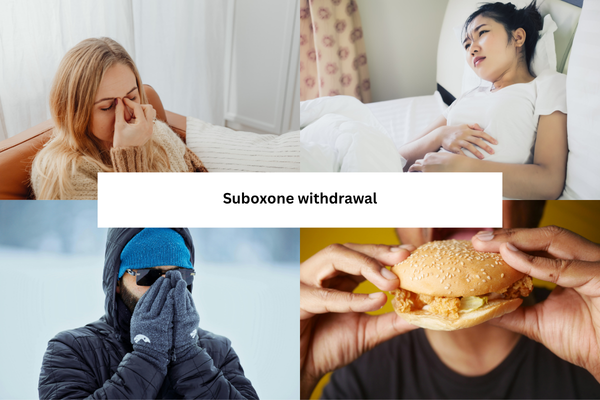
Suboxone withdrawal is generally less intense than withdrawal from full opioids, but it tends to last longer due to the drug’s extended half-life. This is why tapering off gradually under medical supervision is strongly recommended.
Managing Suboxone use safely
If you are thinking about reducing or stopping Suboxone, here are some practical steps that can help:
- Taper gradually: Never stop abruptly. A healthcare professional can design a tapering schedule that reduces your dose slowly, significantly easing withdrawal symptoms.
- Seek professional support: Organisations such as the Substance Abuse and Mental Health Services Administration (SAMHSA) offer confidential resources and guidance for people managing substance use.
- Stay hydrated and eat well: Good nutrition and adequate hydration support your body’s ability to process and recover from medication changes.
- Prioritise sleep: Sleep disruption is common during withdrawal. Establishing a regular sleep routine can help your body adjust more quickly.
- Build a support network: Friends, family, or peer recovery groups can provide practical and emotional support through the process.
- Consider therapy or counselling: Behavioural therapies can help you identify triggers, develop coping strategies, and reduce the risk of relapse.
When to seek help
You do not have to manage this alone. Consider reaching out to a healthcare professional if:
- You are finding it difficult to stop taking Suboxone safely on your own
- Withdrawal symptoms are becoming hard to manage
- You are experiencing strong cravings or feel at risk of relapse
- Suboxone use is interfering with your daily life or responsibilities
Seeking help early can make a significant difference to your recovery outcomes.
Final thoughts
Suboxone can remain in your system for 7 to 10 days or longer, depending on your individual circumstances. It plays a valuable role in opioid recovery, but like any medication, it works best when used with a clear understanding of how it affects the body. If you are considering stopping Suboxone, always do so with medical support and at a pace your body can handle. Recovery is a process, and the right information, combined with the right support, can make all the difference.
References
| ↑1 | Velander, J.R. (2018). “Suboxone: rationale, science, misconceptions.” Ochsner Journal, 18(1), 23–29. |
|---|---|
| ↑2 | Tremonti, C. and Haber, P.S. (2020). “Drug testing in addiction medicine.” In Textbook of Addiction Treatment: International Perspectives. Springer International Publishing, pp. 637–654. |