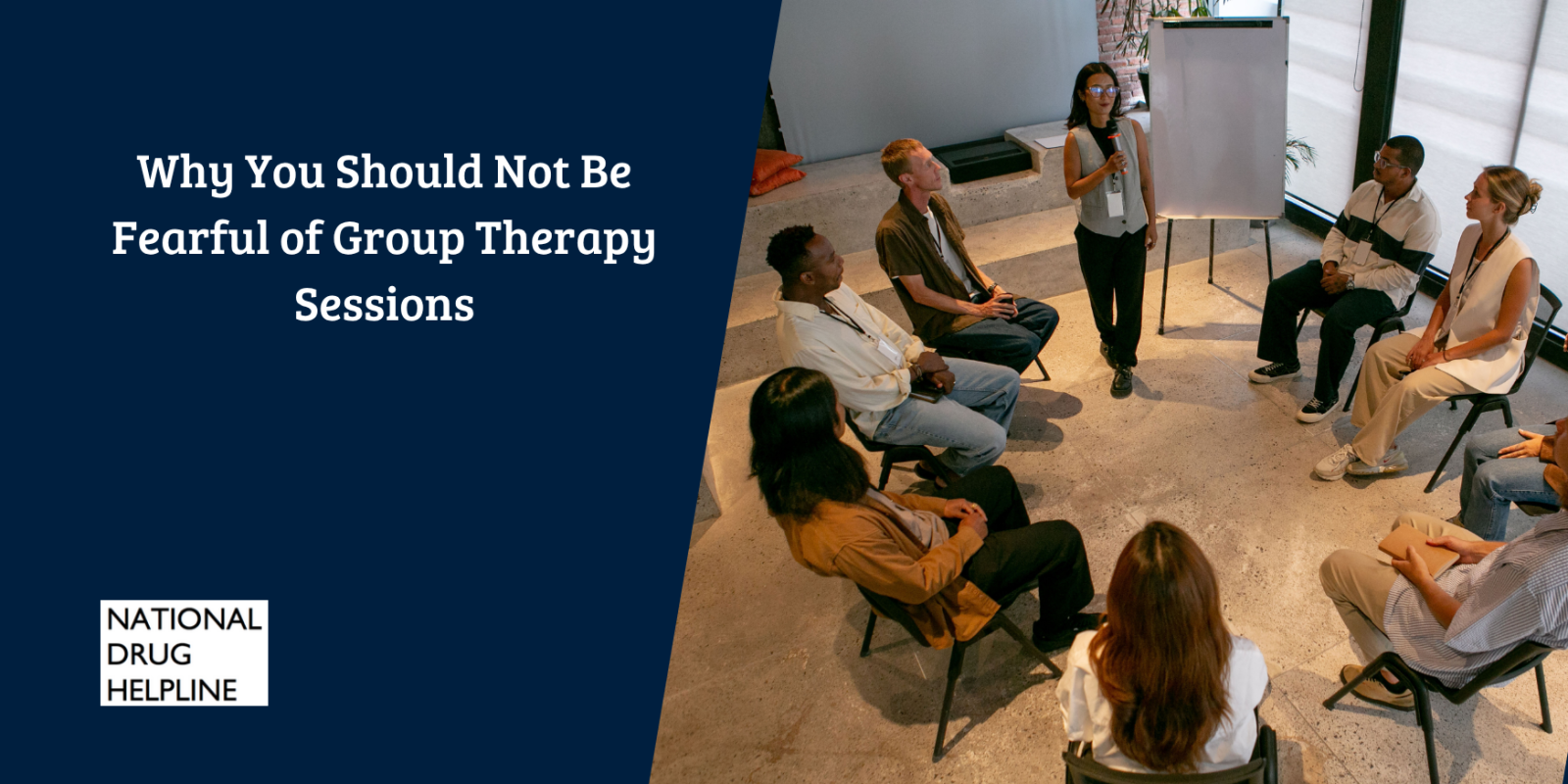
Starting therapy can feel like a big step, particularly if you are unsure what to expect. For some people, the idea of attending a session with several other participants can make that first step feel even more difficult.
If you are experiencing group therapy session fear, you may have mixed feelings. However, feeling nervous about group therapy does not necessarily mean that the experience will be as intimidating as you imagine.
In this article, we take a look at how group sessions work so you may feel more prepared.
Why Might Group Therapy Feel Intimidating?
If you are feeling uncomfortable about joining a group therapy session, you might find that you experience group therapy session fear. Talking about personal experiences can be difficult in any therapeutic setting. When other people are present, it may feel as though there is an additional layer of vulnerability.
You might also worry about what other participants will think of you. Perhaps you are concerned that they will not understand your situation or that you will say something embarrassing. For some people, the concern is simply about speaking in a group. If you are naturally quiet or find social situations uncomfortable, the idea of contributing to a conversation may feel challenging.
It is worth remembering, though, that other participants are generally attending for their own reasons. They are not there simply to judge you. Some may have felt nervous about their first session too.
You Are Not Expected to Share Everything
One of the biggest misconceptions about group therapy is that you will immediately be expected to tell everyone your personal story. The exact format varies depending on the type of group, the treatment provider, and the needs of the participants. Some sessions may involve open discussion, while others could include educational material, coping strategies, or structured activities.
You may be invited to introduce yourself or contribute to the discussion, but this does not necessarily mean revealing everything about your experiences. If you are worried about what will be expected of you, tell the therapist that you are nervous. This may give them an opportunity to explain the process and answer any questions before you begin.
Shared Experiences May Offer Reassurance
One potential benefit of group-based treatment is the opportunity to meet people who may understand aspects of what you are experiencing. Everyone will have their own circumstances, so you should not expect other participants to have exactly the same experiences. However, hearing someone discuss a challenge that feels familiar can sometimes make you feel less alone.
Research has identified potential benefits of peer support groups, including improved treatment engagement,[1] reductions in relapse rates and improvements in self-efficacy, although the researchers also note limitations in the available evidence. A more recent review[2] found encouraging evidence that mutual-help groups may be associated with outcomes such as reduced drug use and addiction severity, while also emphasizing that further research is needed.
These findings do not mean every group will work for every person. Mutual-help and peer-support groups can also differ from professionally led group therapy. However, they provide some insight into why connection with others can be useful for certain people.
Group Therapy Is Not a Competition
Another possible source of group therapy session fear is comparison. You might hear someone talking about their progress and wonder whether you should be further along yourself. Alternatively, another participant may have a very different experience, making you question whether you belong in the group.
Recovery looks different for everyone; each person in therapy has different circumstances, goals, and experiences. Some people may feel comfortable speaking during their first session, while others may prefer to listen for a while before becoming more involved. This can give you an opportunity to hear different perspectives.
What Happens During a First Session?
Not knowing what will happen can make group therapy seem more intimidating. While every group is different, an initial session may include introductions and an explanation of the group’s purpose. The therapist may also discuss expectations around participation, communication, and confidentiality.
Depending on the group, there may then be a discussion or structured activity. You do not necessarily need to prepare a speech or know exactly what you are going to say. It might help to ask any questions you have before the session so you can be more aware of what to expect.
You Can Take Your Time
If you are worried that you will have to talk constantly, it may be reassuring to know that participation can look different for different people. You may initially prefer to spend more time listening while you become familiar with the therapist and other participants. As you become more comfortable, you may decide to contribute more.
There is no need to expect yourself to become the most outspoken person in the room. If you are unsure about how much participation is expected, you can discuss this with the therapist. Being honest about your comfort level may help them understand how best to support you.
Finding the Right Group Matters
Not every group will be the same, and not every group will necessarily feel like the right fit. Groups can vary in size, structure, and focus. Some may concentrate on a specific mental health concern, while others may be designed around substance use, recovery, or another shared experience.
There is also a difference between professionally facilitated group therapy and peer-led or mutual-help groups. Although they may share some similarities, they are not necessarily the same type of support.
If you attend a group and decide that it does not feel right, that does not automatically mean group therapy is unsuitable for you. You may simply prefer a different group, therapist, or treatment format.
Final Thoughts: Why You Should Not Be Fearful of Group Therapy Sessions
Perhaps the most important thing to remember about group therapy session fear is that you do not have to eliminate your nervousness before exploring the option. Feeling uncertain about an unfamiliar situation is completely understandable. You may be concerned about meeting new people, talking about personal experiences, or simply not knowing what to expect.
There is no single treatment option that is right for everyone. If group therapy has been suggested to you, speaking with a qualified professional can help you understand what it involves and whether it may be appropriate for your circumstances. Sometimes, taking the first step can be the hardest part of trying something unfamiliar.
References
| ↑1 | Tracy, K., & Wallace, S. P. (2016). Benefits of peer support groups in the treatment of addiction. Substance Abuse and Rehabilitation, 7, 143–154. https://pmc.ncbi.nlm.nih.gov/articles/PMC5047716/ |
|---|---|
| ↑2 | Kepner, W., & Humphreys, K. (2025). Effectiveness of mutual help groups for illicit drug use disorders: A review of the current literature. Current Addiction Reports, 12, 12. https://pmc.ncbi.nlm.nih.gov/articles/PMC12360454/ |