In the United States, drug recovery has long been shaped by policy. The policies can influence all aspects of drug recovery, from funding for treatment, prevention, and harm reduction to enforcement, incarceration, and public-health funding.
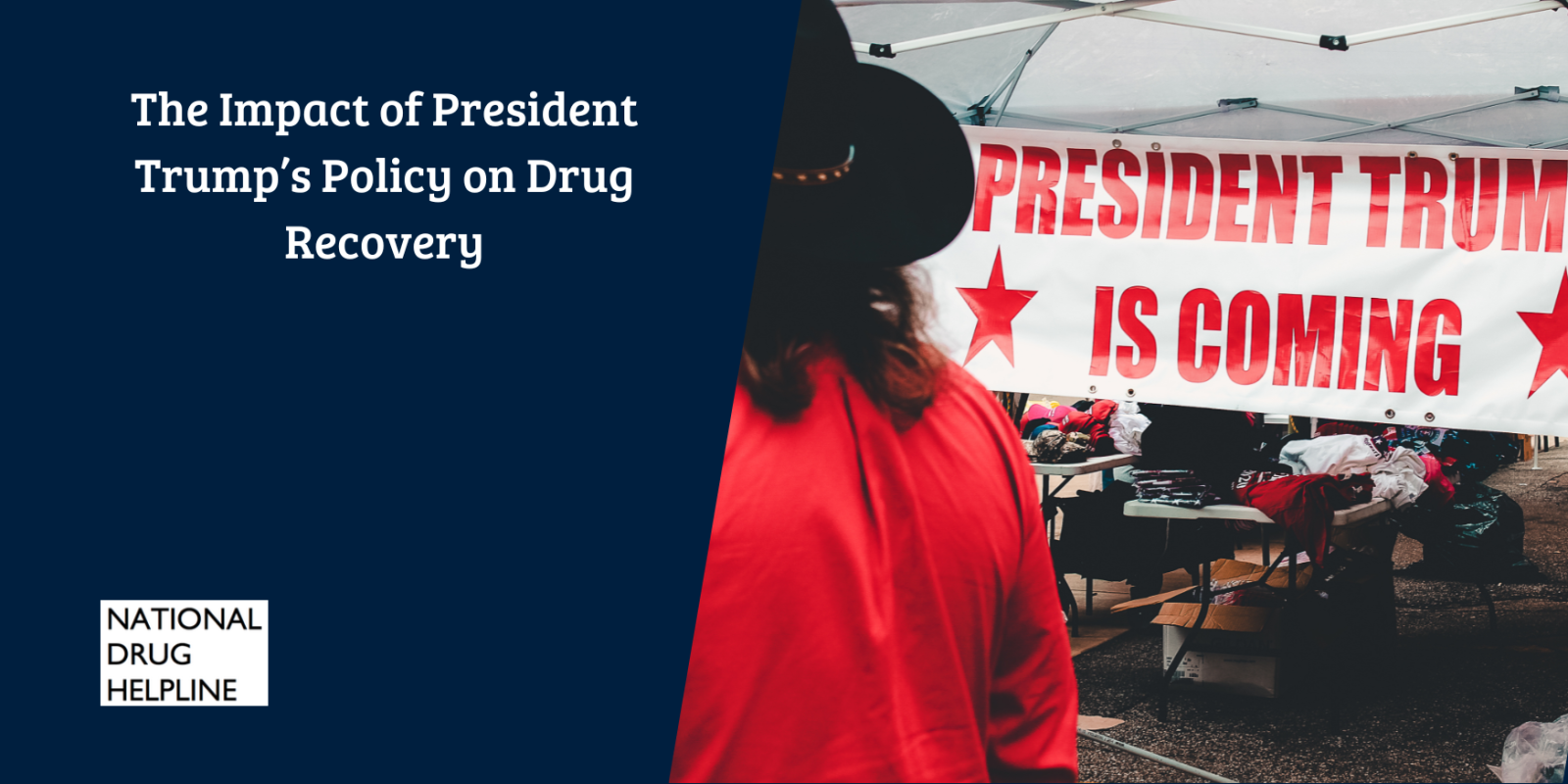
Under Donald Trump’s presidency, drug policy has again taken center stage. He has reinvestment in some recovery services and also renewed emphasis on enforcement and punitive measures.
What Did Trump Do: Key Policy Changes
Reauthorization of Recovery Funding: the SUPPORT for Patients and Communities Act
- One of the major moves under Trump has been reauthorization of funding for addiction treatment and recovery services. He has authorized this through the SUPPORT Act, which had been originally enacted in 2018. [1]
- The Act also expands treatment access under programs like Medicaid and Medicare for opioid use disorder (OUD). This has allowed states to fund residential treatment via partial repeal of previous Medicaid restrictions on mental-health/SUD inpatient coverage. [2]
- Furthermore, it also provides resources for community-based recovery centers. It also provided support for workforce training for addiction-treatment providers.
- The act also offers loan repayment for addiction professionals and funds prevention and youth-oriented programs.
All of these steps mark a clear acknowledgment by the administration of the need for treatment- and recovery-oriented responses to drug addiction and not just enforcement.
A New Public Stance: Policy Priorities That Include Treatment and Recovery
According to a recent White House drug policy statement, the administration has listed among its priorities:
- Increasing the number of people receiving evidence-based treatment
- Expanding peer support and recovery community services.
Thus, the government under Trump appears to be striving for a balanced approach. They aim to reduce supply via enforcement and border control. A big improvement under Trump is their support and provisions towards ensuring treatment and recovery resources for those in need.
What’s Been Cut and Why That Matters
Funding & Institutional Support Cuts
- While the government under Trump has reauthorized some recovery funding, the administration has revoked roughly US$11.4 billion in grants for addiction, mental-health, and related programs. [3]
- Additionally, a restructure was announced in 2025. It folds SAMHSA (the federal agency traditionally responsible for mental-health and addiction services) into a new entity under the administration.
- Many critics fear that this consolidation could undercut specialized addiction-treatment expertise and disrupt services for many in recovery.
- Moreover, some core research funding that is crucial for understanding addiction and improving treatments appears to have been reduced or halted.
Shift Away from Harm Reduction
- A new executive order that targets homelessness, addiction, and public-order concerns pushes for involuntary commitment of homeless people into treatment or institutional settings as many of them suffer from substance use disorder or mental illness. [4]
- The order reportedly ends or penalizes harm reduction and safe consumption programs such as supervised consumption sites, needle exchanges, or other low-threshold interventions. Public health experts have long considered that these programs are vital for reducing deaths from overdose and transmission of disease.
All of these changes mark a clear policy shift. The shift is away from health centered efforts to reduce harm. Instead, it is moving towards enforcement in criminal justice style and institutional solutions for drug abuse and homelessness.
How the Mixed Legacy Affects Drug Recovery
More Treatment Access for Some
Owing to the SUPPORT Act’s reauthorization and Medicaid expansion for residential treatment, people suffering from opioid or substance use disorders can now have better access to addiction care based on evidence. This includes medication-assisted treatment (MAT) and residential programs.
This move helps reduce barriers for those seeking help. This is especially true for people who do not have private insurance or who have limited means.
The policy aims to increase support for peer-recovery networks and community-based treatment centres. By doing so, it hopes to build long-term recovery infrastructure rather than rely solely on incarceration or emergency care.
Disrupted Services and Worsened Access for Vulnerable Groups
At the same time, abrupt funding cuts, agency consolidations, and the dismantling of support for harm reduction have all undermined treatment and recovery efforts. This is especially true in the case of marginalized groups.
Experts have warned that if you roll back funding for addiction treatment, prevention, and harm reduction increases risks of overdose, relapse, homelessness, and untreated mental illness.
Communities in low-income or underserved areas often rely solely or heavily on nonprofit, public health, or harm reduction organizations. They may see services vanish or be significantly reduced even when the need for support remains high.
A Return to Enforcement-Focused Strategy
Current policy mixes reflect a hybrid approach that combines enforcement, treatment, and recovery. Enforcement steps include border control and punitive measures such as involuntary commitment. But these two elements are separate and often conflict with each other.
For instance, if you cut funding for harm reduction while expanding institutionalization, drug users may be punished or marginalised instead of being supported in their recovery.
In some cases, treatment access may be undermined by cuts to the public health infrastructure and specialized agencies.
Researchers have previously argued that policies that mainly focus on abstinence, enforcement, or institutionalization without addressing social factors such as housing instability, economic inequality, and access to care often fail to control addiction issues or support lasting recovery.
Broader Context & Historical Echoes
The current mixed policy under Trump echoes the period of the so-called war on drugs initiated in the 1970s, which was driven by a criminal justice mentality. Over time, it led to mass incarceration, racial disparities, and persistently high rates of overdose deaths.
Critics now argue that a lack of investment in treatment, prevention, harm reduction, and social supports can further fuel the cycle of addiction and criminalization.
Conclusion
So far, the impact of Trump’s drug-recovery policies is deeply mixed. On one hand, the reauthorisation of treatment funding and expansions under the SUPPORT Act have renewed opportunities for many struggling with addiction.
But, on the other hand, the funding cuts to public-health, restructuring of key agencies, and a turn away from harm reduction toward enforcement and institutionalization may have jeopardised recovery for the most vulnerable groups. They mostly impact those who lack economic or social stability.
The impact of this policy mix on addiction remains uncertain. But what is clear is that the future of drug recovery depends not merely on laws and budgets. It relies on how meaningful, accessible, and humane the services will be delivered.
If you’re struggling with addiction, feel free to reach out to explore your treatment options.
References
| ↑1 | Trump Administration Reinstates Funding for Addiction Treatment. Addiction News |
|---|---|
| ↑2 | 2025 Federal Addiction & Mental Health Policy. Behave Health |
| ↑3 | Trump team revokes $11 billion in funding for addiction, mental health care. NPHR |
| ↑4 | Statement Of Drug Policy Priorities. The White House Executive. Office Of The President. Office Of National Drug Control Policy |