Millions of people and families in the United States are affected by alcohol addiction. For many years, Alcoholics Anonymous (AA) has been one of the most popular programs for getting better, but people still ask: Do AA programs work?
This article explores Alcoholics Anonymous effectiveness by looking at scientific evidence, success rates, pros and cons, and other options. People who want help can make better choices about their recovery journey if they know what research really shows.
History of Alcoholics Not known
Bill Wilson and Dr. Bob Smith started Alcoholics Anonymous in 1935. [1] AA is based on a 12-step program that stresses not drinking, getting support from others, being responsible for your actions, and growing spiritually.
Three main things led to AA’s quick growth:
- Free and widespread access
- Support from peers instead of medical treatment
- A recovery framework that is both structured and adaptable
AA is active in more than 180 countries today, and there are tens of thousands of meetings in the US every week. [2]
Why People Have Argued About How Well AA Works
Even though many people value being part of Alcoholics Anonymous, doctors and researchers have been arguing about AA’s success rates for a long time. There are a few reasons why there is a disagreement over the alcohol addiction recovery programs:
- It’s hard to track people over time when they are anonymous.
- Early research predominantly depended on self-reported outcomes.
- Many people thought that dropout rates meant failure.
- It is more difficult to study AA using traditional medical models because it is not a clinical treatment.
Critics have said for years that there wasn’t enough good evidence to show that AA worked better than other programs for recovering from alcohol addiction.
What the Proof Shows
Results from the Cochrane Review
A significant evaluation of 12‑step program effectiveness originated from an extensive Cochrane Review that examined data from numerous participants across various studies. [3]
The review came to the conclusion that:
- AA and 12-step facilitation programs were equally or more efficacious than alternative treatments.
- Over time, participants had higher rates of abstinence.
- AA made healthcare less expensive by lowering the number of hospitalizations and relapses.
This was a big change in how scientists saw AA.
Long-Term Studies and Meta-Analyses
Several meta-analyses have corroborated these findings [4], indicating that individuals who regularly participate in AA meetings are inclined to:
- Stay sober for longer
- Have fewer relapses
- Make social networks that are more focused on recovery.
It is important to note that effectiveness goes up when participation is regular and long-term, not short-term or sporadic.
Federal Health and NIAAA Perspectives
The National Institute on Alcohol Abuse and Alcoholism (NIAAA) says that Alcoholics Anonymous (AA) is a good way to get help with recovery, especially when it is used with professional treatment. Instead of being a stand-alone solution, federal health agencies now often suggest AA as part of a full recovery plan.
How AA Helps People Get Better
Knowing why AA works for a lot of people can help you understand how it fits into programs to help people with alcohol addiction.
Help From Friends And The Community
AA gives people a sense of belonging, which lowers the risk of relapse by making them feel less alone. Shared experiences build trust and responsibility.
A Structured Framework For Recovery
The 12 steps give people a clear, repeatable way to think about their actions, take responsibility, and stay sober for a long time.
Who You Are And What You Want To Do
A lot of people who take part in the study adopt a recovery-focused identity, which helps them stay committed and strong during tough times.
Accessibility
Anyone can get AA, no matter where they live, how much money they have, or what kind of insurance they have.
Who AA Works Best For
Research and clinical experience indicate that success rates in Alcoholics Anonymous are elevated for specific individuals.
AA might be best for people who:
- Want to stay sober for a long time
- Prefer getting help from a group
- Do well with structure and routine
- Go to meetings often and talk to a sponsor
Alternatives and Complementary Approaches
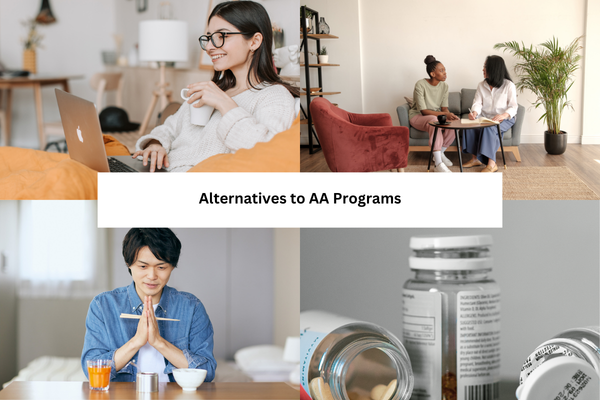
There are a number of good alternatives and supplements to AA, which is a good thing.
SMART Recovery
SMART Recovery is all about giving people the tools they need to take control of their lives, improve their thinking, and change their behaviour. It doesn’t use spiritual language and instead focuses on scientific ideas.
Cognitive Behavioural Therapy (CBT)
CBT helps people figure out what thoughts are making them drink and change them. It is one of the therapies for substance use disorders that has been studied the most.
Medication-Assisted Treatment (MAT)
FDA-approved drugs like naltrexone and acamprosate can help lower cravings and the risk of relapse, especially when used with counselling or peer support.
Digital and Online Support Groups
Virtual recovery communities are flexible and private, which makes it easier for people who can’t or don’t want to go to in-person meetings to get help.
A lot of people do best when they use AA along with one or more of these other methods.
Conclusion: Do AA Programs Really Work?
It’s clear that Alcoholics Anonymous works for a lot of people, especially those who go to meetings regularly and believe in the group’s community-based model. But not everyone will be a good fit for it, and that’s fine.
Getting better is very personal. What matters most is finding a pathway that aligns with an individual’s beliefs, needs, and circumstances. There are many ways to get better, and all of them should be treated with respect and support, whether they are through AA, therapy, medication, or other programs.
If you or someone you care about is looking into alcohol addiction recovery programs, getting help from a professional can help you understand your options and pick the best one. Call a treatment support number today to find out more about the recovery options and resources that are available.
References
| ↑1 | White, William L., and Ernest Kurtz. “Twelve defining moments in the history of Alcoholics Anonymous.” Recent Developments in Alcoholism: Research on Alcoholics Anonymous and Spirituality in Addiction Recovery (2008): 37-57. |
|---|---|
| ↑2 | Helms, Bonny, Maria Bellringer, and Wendy Wrapson. “The international perceptions of Alcoholics Anonymous and 12-step programs by providers and consumers of Alcohol Use Disorder: A scoping review.” (2024). |
| ↑3 | Kelly, John F., et al. “Alcoholics anonymous and 12-step facilitation treatments for alcohol use disorder: A distillation of a 2020 Cochrane review for clinicians and policy makers.” Alcohol and Alcoholism 55.6 (2020): 641-651. |
| ↑4 | Leurent, Martin, et al. “Efficacy of 12-step mutual-help groups other than Alcoholics Anonymous: a systematic review and meta-analysis.” European Archives of Psychiatry and Clinical Neuroscience 274.2 (2024): 375-422. |